http://www.youtube.com/watch?v=yoImEpn6eRg&feature=youtu.be
Tuesday, May 7, 2013
VLOG: The Woe of Child's Reality
"The Bluest Eye"
http://www.youtube.com/watch?v=yoImEpn6eRg&feature=youtu.be
Hello!! In this blog we filmed ourselves commenting on a statement said be Claudia in page 74.
http://www.youtube.com/watch?v=yoImEpn6eRg&feature=youtu.be

Tuesday, April 23, 2013
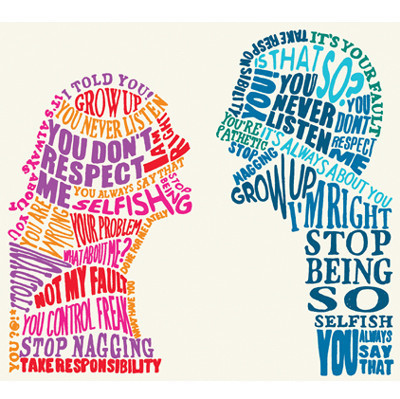
Only My Eyes are Left
Morrison
triggers certain feelings as I read every passage. At first, he described
Claudia’s self-image so well that I understood her desperation to dismember the
blue-eyed doll. Then she lets me stand by the kitchen dinner table and dodge
Cholly as he catapults into a stove, feeling every blow to my face and wishing
his death just like Sammy did. I feel the cold climb up my spine as I too nag
about the lack of coal in this household, because at some point we are all just
going to freeze. And now, I want to disappear with Pecola but my eyes are the
only thing that keeps me from vanishing. I’m always so close.
Her
use of detail and shift in narration, allows me to experience every emotion and
feel every stimuli that bounces off the walls of the household. It becomes so
detailed that I feel the floor thud as Mrs. Breedlove limps into her room. This
is the kind of reaction that every author should achieve through dialogue,
exposition, or narration.
We Lost It
Never
have I ever encountered so much hatred in a couple of paragraphs. From flesh to
flesh, and words to screams, Cholly and Mrs. Breedlove pour out the sum of
their articulated fury. Of course every bad relationship starts with our
dearest friend alcohol because when you wish somebody dead, it’s probably
because they are close to death anyways, “strike that bastard down from his
pea-knuckle of a pride”(42). And if that isn’t enough and Jesus is not
answering your prayers well them go ahead and trip him into the red-hot stove, “
get him, Jesus! Get him!”(44). That’ll do the job!
But
wait I forgot to introduce these characters. It might come as a surprise or it might
sound familiar, but they are husband and wife. Makes you want to consider
divorce, yet in my case it makes me curious as to how this couple met. How long
ago was it when they fell for love at first sight? How would they describe
their tender feeling towards each other before reality struck and ripped them away from their placid relationship? I yearn to read about the times when they went out on dates
and gushed over their embarrassments as they vowed for true love. But this
seems miles away from where they stand now and I can’t help but feel nostalgic
for something I hope was real. They are killing themselves inside and they are
killing the entire household as they fill it up with hatred. It won’t be long
when it bursts.
Friday, April 19, 2013
A Story by Definition
Given the fact that the
first chapters are actually told by a child, in this case Claudia, the
vocabulary is well…childlike. The words are simplistic and even self-explanatory,
but when their definitions are put together they tell a story of their own.
Martydrom: A display of feigned or exaggerated suffering
Schemata: A
representation of a plan or theory in the form of an outline or model.
Debris: Scattered
fragments, typically of something wrecked or destroyed.
Zest: Great
enthusiasm and energy.
Hollyhocks: A
tall Eurasian plant (Alcea rosea) of the mallow family, widely cultivated for
its large showy flowers
Starch: Stiffen
(fabric or clothing) with starch
The family is clearly suffering and the children are mirror
images of who they are supposed to be, except that they are shattered wrecked
and destroyed. They have been born into an outline of their lives. The way they
despise their roots, the way they curse poverty, and the way they accept the
fact that they were born into misery is merely proof of the zest they were
deprived from since the beginning of their existence. Like Hollyhocks, the
minds of the adults are thin, narrow, and still, but the children seem to
breakthrough those limitations as long as they stay innocent and naïve when it
comes to reality. They are shielded by creation, imagination, and most
importantly their ability to question.
UGLYUGLYUGLYUGLYUGLYUGLY
That
was the only word that stood out in the text. While I was reading I took the
job of a word watcher and decided that there was no better way to analyze the
characters than by their lexicon. If I were to classify the usage of this word
it would be lined up like this:
“You are ugly people.”
“Their
ugliness was unique.”
“They
wore their ugliness.”
“Why
were they so ugly?”
The narrator has the most disgusted perception of the Breedloves, she expresses the fact that they inherited or perhaps were born into their ugliness, “…they took the ugliness into their hands” (38). Even though she emphasizes every despicable detail of the character’s physique, at the same time she acknowledges the way they adjust to their identity. Mrs. Breedlove takes hers for support of a role she frequently plays, Sammy uses his as a weapon to inflict pain upon others, and Pecola simply hides behind hers as if were a mask that shielded her from life (ironically it is the same thing that haunts her).
Morrison believes their ugliness does not belong to them, in other words they were convicted to eternal discrimination and still they did nothing to contradict the statement! This can only mean that the author’s true purpose is to demonstrate the true beauty of the family by doing the exact opposite: calling them ugly. It is almost as if he were tempting the reader to agree with his vivid descriptions when in reality he is showing that they can choose to accept their racial background and embrace who they are, but instead they lower their heads and accept to hear that they are branded as uniquely ugly. They fall victims of the imposter syndrome. The human tendency to self-doubt your potential and brand yourself as INCOMPETENT. The Breedloves yearn for the return of their mask.
Tuesday, April 16, 2013
Peeped
While
reading the first chapter I realized there were specific phrases or sentences
that were unique when it came to the understanding of the characters and the author’s
illustration of their lives.
Sentence
#1
“Gone
the ink marks from legs and face, all my creations and accumulations of the day
gone, and replaced by goose pimples”(22).
Claudia
is actually saddened by the fact that the shower is washing away the marks on
her skin, yet we usually perceive a shower for washing away the dirt, filth and
even memories or emotions. When you are stressed out by a situation there is
nothing more soothing than a nice hot bath, but for Claudia it is obviously the
worst ending for her day. This sentence emphasizes the childlike narration
because children actually HATE taking a shower and what we perceive as dirt and
filth, Claudia sees as “creations and accumulations of the day gone”. She feels
like her memories are erased every time she steps in and she is fixated on the
way the ink runs down her legs alongside the drops of water.
Sentence
#2
“
Ain’t nobody even peeped in here to
see whether that child has a loaf of bread. Look like they would just peep in to see whether I had a loaf of
bread to give her but naw”(25).
Although
written in a very informal conversational tone, Mama has a far more important
social statement that uses a loaf of bread as her metaphor towards economic
injustice. “Ain’t nobody” can perhaps be “old trifling Cholly”, Pecola’s
father, who has been out of jail for two days and hasn’t bothered to pick up
his daughter. It might also be the government for not supporting her
financially now that she is raising a girl that is not even her own. Her
irritated tone implies that the problem is not whether Mama is giving her kids
enough food, its whether she has food
to give them, and nobody has bothered to peep in and realize it.
Sentence
#3
“I
picked toe jam, Frieda cleaned her fingernails with her teeth, and Pecola
finger-traced some scars on her knee-her head cocked to one side”(24).
In
a healthy environment when we just sit
there, you can say: I fixed my dress,
Beatriz finished the last crumbs of her cake, and Andrea painted her nails.
This is an event more suitable and typical when it comes to girls of a young
age. Obviously an event these three girls are far from experiencing . Toni Morrison
uses a simplistic tone in order to exemplify the way tracing one’s scars is
just anotherway to entertain yourself, its normal. I hope I’m not the only who
agrees to disagree, but the author wants this exact reaction in the reader: I
WANT TO LOOK AWAY!
As White as a Rose's Pedal
IWISHIWASABLUEEYEDYELLOWHAIREDPINKSKINNEDDOLLIWISHIWASABLUEYEDYELLOWHAIREDPINKSKINNEDDOLLIWISHIWASABLUEYEDYELLOWHAIREDPINKSKINNEDDOLLIWISHIWASABLUEEYEDYELLOWHAIREDPINKSKINNEDDOLL
While reading the second chapter, as a reader, we finally
catch a glimpse of how this family’s life is full of abuse, discrimination and
misery. Morrison demonstrated Claudia’s escape from her reality through a
blue-eyed doll. But wait. You might think like the rest of the adults, and
believe she wants to play house while feeding the precious doll and nurturing
it as her mother. You’re wrong. How can Claudia be given such a false
representation of beauty, and not be expected to yearn every aspect of it?
Her desire is so powerful that she feels that having it to
play with is not enough. So what does she do? Simple, she dismembers it “to see
of what it is made, to discover the dearness, to find the beauty, the
desirability that had escaped…”(20).
Your reaction: “You-don’t-know-how-to-take-care-of-nothing.
Now-you-got-one-a-beautiful-one-and-you-tear-it-up-whats-the-matter-with-you?”
Oh stop it you sound just like her mother!
Morrison creates a character that does not have anything
materialistic in her life, and yet she does not want to possess any object. She
would rather feel. She would
rather be the very thing she holds on to everyday because she believes her race
is guilty for everything that happens in her life.
Subscribe to:
Posts (Atom)